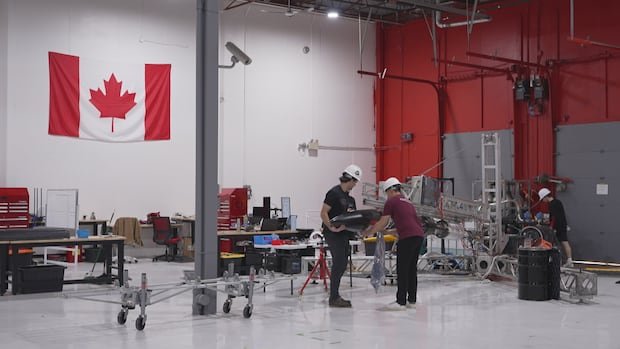


Canada, as the only G7 nation lacking its own rocket launch capabilities, is striving to develop a Canadian-made rocket. Several Canadian companies are in a race to enable the country’s access to space independently, amidst concerns that SpaceX, a major player in the industry, might reduce its launch services. These rocket companies are facing challenges due to the high costs, tight deadlines, and evolving government priorities, making the journey to space complex.
Without domestic rocket launch capabilities, Canadian customers, including private firms and government entities, rely on external providers, notably SpaceX, for satellite launches. These satellites play crucial roles in telecommunications, military applications like threat detection, and earth observation tasks such as monitoring wildfires. The absence of local launch control raises concerns that foreign entities could decline to launch Canadian technology.
To address this issue, the Canadian government has identified space as a key sovereign capability and introduced legislation allowing for launches from Canadian territory. Funding has been allocated to support three Canadian companies working on developing light-lift rocket capabilities by 2028. NordSpace, one of these companies, experienced an unsuccessful suborbital rocket test launch in 2025 but plans to try again soon. Reaction Dynamics is another company aiming to achieve orbital launches by 2028.
Canada Rocket Company, the newest entrant, aims to build a medium-lift rocket powered by methalox-fuelled engines to carry multiple satellites into low Earth orbit simultaneously. The company has secured significant private investment and government funding to establish a test facility in London, Ontario. Despite the challenges posed by funding constraints in the past, the surge in public and private investments has renewed optimism among industry players.
Meanwhile, SpaceX is transitioning from its Falcon 9 rocket to a larger vessel called Starship, causing concerns among satellite customers reliant on Falcon 9 services. This shift could create opportunities for emerging rocket manufacturers. Canadian companies like Canada Rocket Company are eyeing a share of the market that SpaceX will vacate once it phases out the Falcon 9.
In conclusion, the development of Canadian rocket launch capabilities is a long-term endeavor that requires substantial investments in both public and private funding. Industry experts emphasize the importance of sustained support to ensure successful and regular rocket launches from Canadian soil in the future.