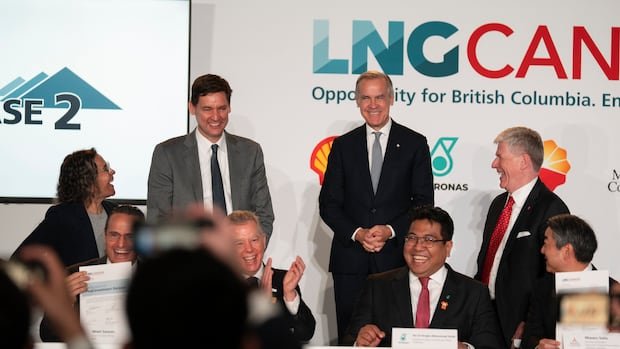


LNG Canada has announced the advancement of its Phase 2 expansion project in Kitimat, British Columbia, which is set to potentially double the export of liquefied natural gas from the northern coastal plant to international markets. Speaking on Tuesday, LNG Canada CEO Chris Cooper highlighted that the project will generate numerous job opportunities and reinforce Canada’s position as a reliable energy partner.
The Phase 2 initiative, involving a collaboration of Shell, Petronas, PetroChina, Mitsubishi Corporation, and Korea Gas Corp, signifies a substantial investment totaling about $33 billion. This development is poised to establish the facility as the world’s second-largest of its kind, connecting cost-effective and low-carbon Canadian energy resources to global markets. Prime Minister Mark Carney emphasized the economic benefits of the expansion, estimating a significant contribution to the national economy and the creation of up to 4,000 jobs in Kitimat during peak construction phases.
According to Skeena-Bulkley Valley Conservative MP Ellis Ross, credit for the project’s progress should be attributed to local Indigenous leaders who have long been involved in fostering the LNG industry. Despite political support for the LNG sector from various government entities, concerns have been raised regarding the potential environmental impact of expanding LNG production on Canada’s greenhouse gas emissions amidst a climate crisis.
LNG, derived from natural gas extracted through hydraulic fracturing mainly in northeast B.C. and Alberta, undergoes a cooling process before being transported overseas for utilization as a fuel. The expansion project aims to double the annual production of liquefied natural gas from 14 million to 28 million tonnes and includes enhancements to the existing pipeline infrastructure to accommodate the increased capacity.
While proponents advocate for LNG as a cleaner alternative to coal or oil, critics cite concerns about the environmental implications of its production, particularly the rise in seismic activity linked to hydraulic fracturing. The ongoing debate surrounding LNG’s environmental impact underscores the need for a balanced approach to energy development amid growing climate change concerns.
The LNG project has garnered political support as a national priority, with both the B.C. NDP and B.C. Conservative Party endorsing plans to boost LNG production. However, the B.C. Greens have called for a halt on further expansion, citing environmental and Indigenous rights issues, and cautioning against fast-tracking projects that could compromise oversight and accountability.