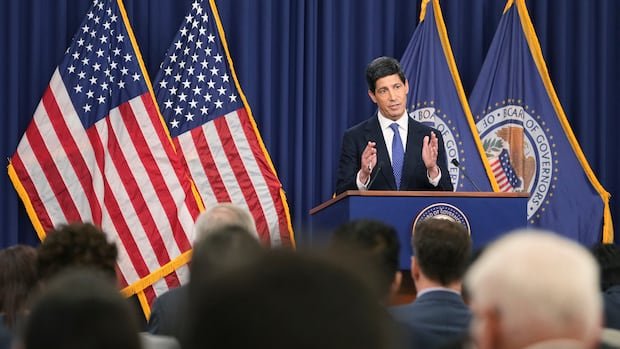


The Federal Reserve of the United States increased its benchmark interest rate on Wednesday for the first time since 2023 to address persistent high inflation concerns. This quarter-point raise brings the Fed’s key rate to approximately 3.9 percent and could lead to higher borrowing expenses for American mortgages, auto loans, and credit cards over time.
The hike comes amidst challenges faced by Americans due to elevated prices for essentials like groceries, fuel, and housing, making affordability a significant topic in the upcoming midterm elections just seven weeks away.
In its quarterly projections, the Fed indicated that its rate-setting committee foresees another rate hike later this year, potentially raising the rate to 4.1 percent. Fed Chair Kevin Warsh, appointed by President Donald Trump, highlighted that the economy has been gaining momentum since the decision to maintain rates in late July. Inflation has remained persistently above the Fed’s two percent target, with little indication of easing.
Warsh emphasized the urgency to address high inflation levels, stating, “The plain fact is that inflation is too high and has been for too long.” The unanimous support for the rate hike from Federal Reserve policymakers aimed to facilitate a quicker return to the two percent inflation goal.
The tension between the U.S. and Iran, contributing to rising gas prices, influenced the Fed’s decision to support rate increases. Warsh, since taking office in May, has emphasized the Fed’s commitment to curbing inflation, emphasizing a data-driven approach to determine the effectiveness of inflation-controlling measures.
The rate hike signifies a shift for Warsh, who previously hinted at rate reductions while under consideration by Trump. Despite Trump’s earlier expectations of rate cuts from Warsh, the Fed’s current actions reflect a concerted effort to combat inflation effectively.
The ongoing disruptions in the wake of the Iran conflict, leading to a significant spike in gas prices, pose challenges to curbing broader inflation levels. Recent inflation data revealed a 3.7 percent increase in July compared to the previous year, underscoring the persistent inflationary pressures.
While the rate hike in the U.S. indicates a proactive stance against inflation, economists suggest that Canada may not face similar pressures to raise rates imminently. Rising energy prices due to the Iran conflict have contributed to inflation in both countries, with Canada maintaining a steady three percent inflation rate in August, exceeding the Bank of Canada’s two percent target.
However, the inflation situation in the U.S. appears more severe, with core inflation rates higher than those in Canada. The differing economic conditions between the two countries suggest that Canada may not need to raise rates as urgently as its southern neighbor, given its comparatively weaker economic performance.
Economic forecasts also indicate that while both countries are grappling with inflation and rising bond yields, they are entering these challenges from different starting points. As a result, the U.S. is expected to raise rates sooner, with the Bank of Canada likely to delay rate hikes until 2027.