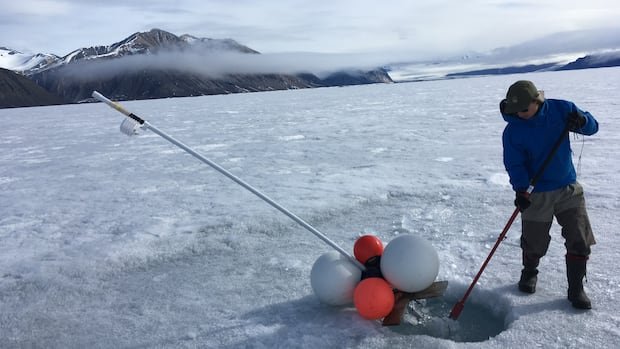


In a recent study, scientists have confirmed the disappearance of Canada’s last remaining epishelf lake, the Milne Fiord epishelf lake on Ellesmere Island in Nunavut. The lead author, Jérémie Bonneau, expressed sadness over the loss, stating that it was the final occurrence of its kind in Canada. This unique ecosystem, where freshwater floated on top of saltwater, has been lost due to the impacts of a warming climate.
The research, published in the journal Scientific Reports, details the process of how the lake vanished, marking the end of a 4000-year era. The Milne Ice Shelf collapse in 2020 led to the lake’s demise as the wall that contained it gave way. The once hidden lake, which had been accumulating freshwater for millennia, suddenly drained into the Arctic Ocean.
Epishelf lakes like the one in Milne Fiord form when freshwater accumulates on top of denser saltwater due to natural barriers like ice shelves. The lake supported distinct ecosystems in its freshwater and saltwater layers, fostering unique bacteria, viruses, and phytoplankton communities.
The loss of the Milne Fiord epishelf lake has significant ecological implications, as its disappearance has disrupted the delicate balance of life in the region. While similar lakes still exist in Greenland and Antarctica, experts warn that these rare ecosystems are also at risk as the planet continues to warm. The study highlights the irreversible impact of climate change on these remarkable natural phenomena.