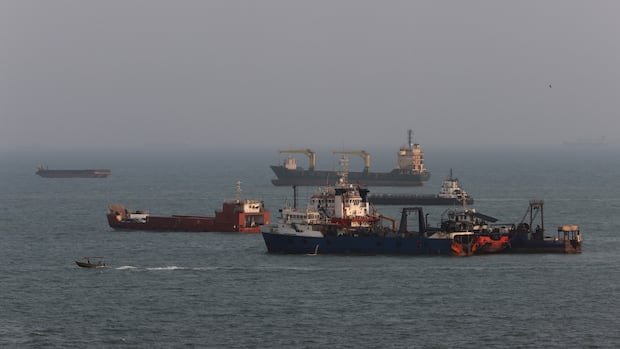


Five Iranian officials are set to be sanctioned by Canada for their involvement in activities in the Strait of Hormuz that are deemed to disrupt international peace. The sanctions are targeted at individuals whose actions are seen to undermine global trade and energy security, as stated by Canada’s Foreign Affairs Minister Anita Anand. The Strait of Hormuz is considered crucial for global navigation, and Iran is urged to de-escalate and uphold international navigation rights.
The sanctioned officials from the Islamic Republic of Iran, including members of the Islamic Revolutionary Guard Corps (IRGC), have been accused of engaging in activities that pose a threat to a vital international waterway, according to Global Affairs Canada. Those facing sanctions include Ali Abdollahi, Lt.-Col. Ebrahim Zolfaghari, Ebrahim Azizi, Shahram Irani, and Hamid Hosseini.
Canada’s latest actions bring the total number of sanctioned individuals and entities in Iran’s security, intelligence, and economic sectors to 232 individuals and 260 entities, as reported by Global Affairs Canada.
The sanctions come amidst mounting pressure to resolve the conflict involving the U.S., Israel, and Iran. Efforts to solidify a peace deal, initially agreed upon in June, have yet to materialize. The war that commenced in February has seen fluctuating rhetoric from U.S. President Donald Trump, who has vacillated between threats of escalation and claims of imminent peace.
Iran, in a bid to exert leverage, has targeted vessels navigating the strait, a critical passageway for a significant portion of the world’s oil and liquefied natural gas before the conflict. Trump has appealed to allies to help secure the global oil shipping route, with Canada and other nations calling for the cessation of blockades in the Strait of Hormuz.
Trump’s efforts have been met with challenges as tensions strain relationships with allies. The U.S. president has expressed confidence in the effectiveness of U.S. and Israeli strikes against Iran’s military capabilities despite ongoing disruptions to shipping in the region.
Secretary of War Pete Hegseth affirmed the U.S. military’s capability to maintain a naval presence in the area to enforce a blockade on Iran indefinitely. The pressure on Trump to end the war intensifies as rising fuel prices impact his approval ratings ahead of the upcoming U.S. midterm elections. Additionally, the global economy faces challenges, with the International Energy Agency forecasting a significant decline in global oil supply this year.