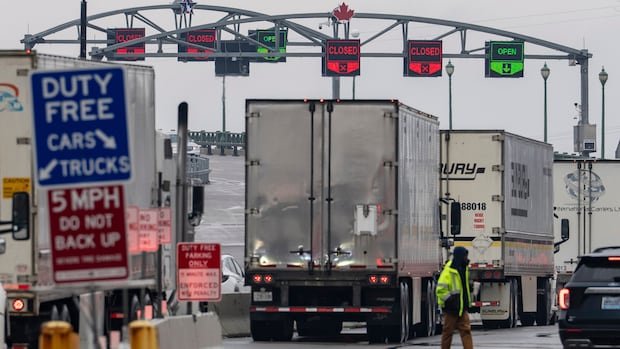


Enforcement of cross-border cargo regulations has significantly increased during the current administration, causing delays and financial burdens for shippers. The rise in tariffs and stricter customs procedures in the United States have led to heightened scrutiny of freight shipments, with demands for extensive documentation and increased penalties.
Breanna Leininger, overseeing U.S. operations at Pacific Customs Brokers in Vancouver, stated that the volume of documentation required by border officials has multiplied tenfold compared to previous years. The depth of customs inspections has also intensified, with a notable increase in the frequency of detailed examinations.
Importers are now facing more stringent requirements to demonstrate compliance with product classifications and trade agreements, necessitating a more comprehensive paper trail of records related to labor and manufacturing. The evolving nature of these demands has made it challenging for businesses to keep up with the shifting criteria.
Data from U.S. Customs and Border Protection reveals a 26% projected growth in audits for the current year compared to 2024. The agency collected $70.6 million US in trade penalties in the first half of this year alone, marking a substantial increase from previous years.
The heightened enforcement measures coincide with an escalating trade dispute between Canada and the U.S., resulting in additional tariffs being imposed by both countries. These disruptions at the border, coupled with the increased administrative burdens, have raised operational costs and deterred cross-border trade activities.
Alan Dewar, an executive vice-president at GHY, highlighted the significant financial implications of these challenges, emphasizing the added costs incurred by delays and disruptions in the supply chain. The complexities of compliance have proven daunting for many businesses, leading some to reconsider their cross-border operations.
U.S. Customs and Border Protection emphasized the importance of importers maintaining compliance and providing accurate information to facilitate smooth trade operations. The agency stated that its enforcement strategies are continually reviewed and adjusted based on risk assessments and trade dynamics.