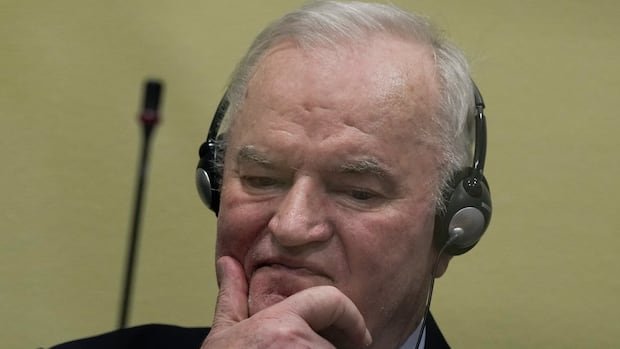


Ratko Mladic, who was found guilty of genocide for masterminding the 1995 slaughter of over 8,000 Muslims in the deadliest atrocity in Europe since World War II, has passed away. Mladic died while in UN custody on Thursday, as confirmed by his attorney Dragan Ivetic, who did not specify the cause of death. The former general had been residing in the hospital wing of the UN detention facility located in a suburb of The Hague during his final months.
The massacre in Srebrenica marked the brutal conclusion of a conflict that lasted more than three years, during which Mladic relentlessly bombarded the besieged Sarajevo with artillery, tanks, mortars, and heavy gunfire, resulting in the deaths of 10,000 individuals. The victims from Srebrenica were hastily buried in mass graves within four days in July 1995, with some remains later relocated to remote areas to conceal evidence of the atrocities.
The objective, as determined by the United Nations International Criminal Tribunal for the former Yugoslavia (ICTY), was “ethnic cleansing” to forcibly remove Bosnian Muslims, Croats, and other non-Serbs in order to create a Greater Serbia. According to the tribunal, Mladic, along with Serbian President Slobodan Milosevic and Bosnian Serb political leader Radovan Karadzic, were part of a criminal plot to execute this plan.
During a hearing at the ICTY in 2014, Mladic, nicknamed the “Butcher of Bosnia,” declared that he did not acknowledge the court’s authority. Upon receiving a life sentence in 2017, he vehemently protested, denouncing the verdict as falsehoods.
Karadzic, who was also convicted of genocide in 2016, and Mladic were at the top of the ICTY’s wanted list for an extended period after the Western powers concluded the conflict. Mladic resided in Belgrade securely but discreetly until Milosevic was deposed in 2000 by a popular uprising. Milosevic passed away in detention in March 2006, just before the conclusion of his tribunal for genocide and other war crimes.
Mladic’s military in Bosnia was characterized by extreme brutality, with prisoners enduring horrific conditions such as starvation, rape, and execution. Mladic oversaw the siege on Srebrenica, where Dutch UN peacekeepers, trusting his assurances of safety, were ultimately betrayed. Despite being designated a “safe area” by the UN, Srebrenica fell to Mladic’s forces, leading to the massacre of its residents.
In 1995, when NATO attempted to restrain Mladic’s troops with the threat of airstrikes, they resorted to using UN peacekeepers as human shields. Mladic eventually stepped down in November 1996 due to strong pressure from Western nations and Bosnian Serb President Biljana Plavsic.
Born in 1943, Mladic was an officer in the Yugoslav People’s Army (JNA) when Yugoslavia began to disintegrate in 1991. He assumed command of the newly formed Bosnian Serb army during the conflict in Bosnia, where his forces swiftly gained control of a significant portion of the country.
Despite facing appeals from Western powers, the post-Milosevic leadership in Serbia refrained from taking action against Mladic due to his status as a hero among nationalist Serbs. Mladic was eventually apprehended in 2011 without resistance, appearing frail and weakened, a stark contrast to his former imposing figure. Despite his health issues and aging appearance, his appeal against conviction was denied in 2021, along with multiple pleas for compassionate release.
The passing of Ratko Mladic marks the end of a chapter in the tumultuous history of the Balkans, as the legacy of his brutal actions continues to reverberate in the region.