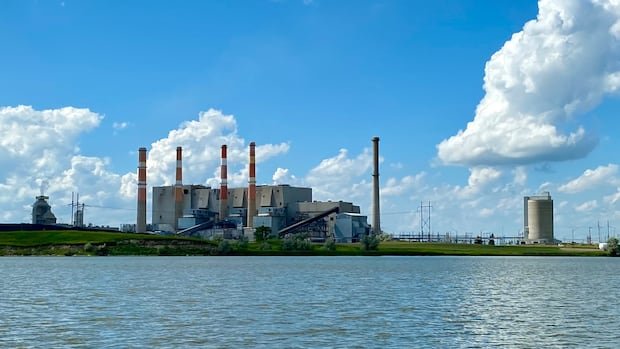


A recent analysis has revealed that the decision by the Saskatchewan government to renovate its coal-fired power plants could potentially incur costs of up to $46.4 billion in the next two decades. This amount significantly surpasses the previously leaked internal SaskPower documents’ estimate of $26 billion over 25 years.
Brett Dolter, an associate professor in the University of Regina’s economics department, conducted the analysis to determine the expenses associated with Saskatchewan’s strategy of utilizing coal-fired power plants as a transitional phase towards nuclear power and Small Modular Reactors (SMRs). According to Dolter, his research indicates that retaining the coal plants and integrating a mix of natural gas facilities and renewable energy systems, as originally planned by the province before the policy reversal in early 2025, would be a more cost-effective and environmentally friendly alternative.
Dolter’s study utilized information from leaked SaskPower documents disclosed by the Saskatchewan NDP, data submitted to the province’s rate review panel, and certain assumptions due to the absence of the provincial government’s internal analysis. He emphasized that factoring in carbon pricing demonstrates even greater savings. Without carbon pricing on heavy emitters, the cost of persisting with coal would amount to $30.2 billion over the next 20 years.
When accounting for carbon pricing, the total expenditure escalates to $46.4 billion, as outlined by Dolter, who applied similar values from Ottawa’s memorandum of understanding with Alberta earlier this year to derive this figure. Dolter highlighted the substantial cost-effectiveness achieved by incorporating carbon pricing due to the substantial pollution attributed to coal plants.
Although the economic implications of Saskatchewan’s current trajectory are evident, Dolter refrained from speculating on the rationale behind the government’s decision. In response to Dolter’s analysis, the provincial government provided a statement emphasizing the importance of reliable and affordable electricity for Saskatchewan’s ongoing development.
Mayor Tony Sernick of Estevan, a city heavily reliant on natural resources, expressed concerns about the potential population decline if coal-fired plants were phased out. However, he noted that the city’s outlook has improved following the government’s refurbishment decision, leading to a more optimistic future with plans for new developments.
Canada’s shift away from coal, initiated in 2012 under former Prime Minister Stephen Harper and reinforced in 2016 by Prime Minister Justin Trudeau’s administration, has faced resistance from Saskatchewan’s government. Crown Investments Corporation Minister Jeremy Harrison defended the province’s stance, asserting the constitutionality of clean electricity regulations and dismissing federal mandates to close coal plants.
Dolter warned that disregarding federal regulations on clean electricity, coal-fired power, and carbon pricing could expose Saskatchewan to legal risks. He underscored the potential consequences of legal challenges, suggesting that the province might incur substantial financial losses if forced to shut down refurbished coal plants after investing billions in renovations.