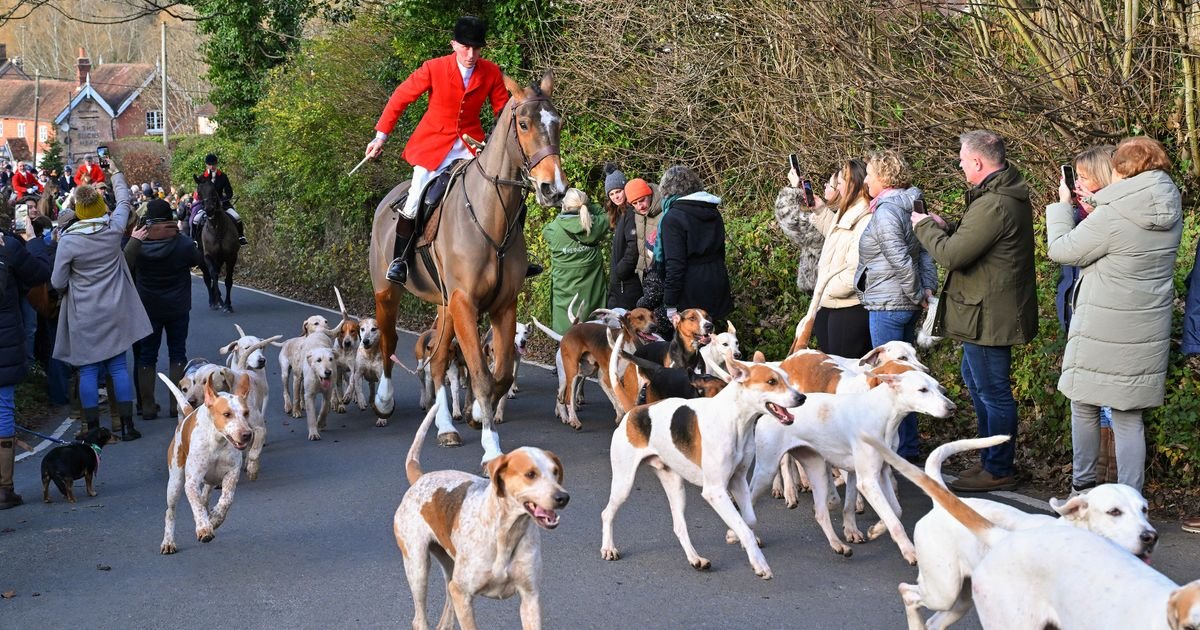


A coalition of volunteers in the UK, consisting of individuals like doctors, teachers, and farmers, is actively involved in policing illegal fox hunting. These volunteers are running grassroots campaigns to assist law enforcement agencies in curbing the practice.
The Government recently released a new animal welfare strategy that includes plans proposed by the Labour Party to put an end to fox hunting. The practice involves dogs following a pre-set scent trail instead of chasing real animals. If implemented, these plans could potentially make the fox hunts on Boxing Day 2025 the last ones ever. Critics argue that hunters are exploiting a loophole to hunt and kill foxes using packs of dogs, a method banned for the past three decades.
Critics of fox hunting have been diligently pursuing suspected hunters who exploit this loophole. They have formed unconventional groups and are employing specialized tactics to aid the police in their efforts.
Researchers from various academic institutions, including the University of Sheffield and Southampton University, have uncovered a group of saboteurs from diverse backgrounds, such as doctors, teachers, and farmers. These individuals are exploring citizen-led policing and evolving tactics to disrupt illegal fox hunts effectively.
The saboteurs, often viewed as mere activists, are highly organized and invest significant time in thwarting fox hunts and gathering evidence of illegal activities, which they then provide to law enforcement authorities.
One of the saboteurs, referred to as “Lizzie,” is described as a middle-class professional with a demanding job. She emphasized that the focus has shifted from a class conflict to upholding the existing law against fox hunting in the UK. The group members are committed to seeing the law enforced and come from various responsible professions.
These professionals utilize non-harmful techniques to disrupt hunts, such as using strong-smelling substances to deter animals, creating false trails, and occasionally physically obstructing hunters. They also employ video cameras and drones to monitor hunting activities and ensure adherence to regulations.