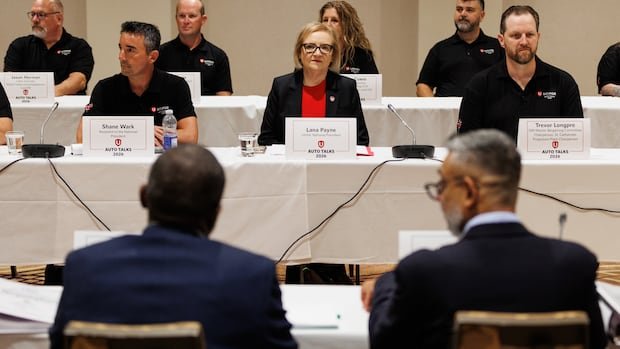


Unifor and General Motors have initiated talks for a new labor agreement, commencing negotiations at a downtown Toronto venue on Monday. The union represents over 4,600 members at various GM facilities in Ontario, including the Oshawa assembly plant, CAMI facility in Ingersoll, as well as operations in St. Catharines and Woodstock.
During the opening discussions, Unifor national president Lana Payne and GM Canada’s president and managing director, Jack Uppal, exchanged greetings to mark the beginning of the negotiations. The negotiation table was set with chairs positioned opposite each other, with Payne at the center and Uppal seated directly across from her.
In a press release on Monday, Payne stated, “We’re starting this new round of negotiations with a strong base established by the agreement with Ford, and we aim to engage in meaningful talks regarding GM’s operations and the future of auto jobs in Canada.”
Unifor has set a deadline of August 21 to reach a preliminary agreement with GM. Uppal expressed the company’s commitment to the bargaining process and acknowledged the significant role that employees play in GM Canada’s success. He highlighted substantial investments made in Canadian manufacturing plants since 2020, totaling $3.3 billion, aimed at securing long-term job opportunities.
Earlier in July, Unifor members approved a new three-year contract with Ford, which included annual pay increases and program commitments to support job security at Ford facilities. Additionally, a program was established to facilitate the transition of laid-off workers from Ford’s Oakville assembly plant to full employment by 2027.
The agreement with Ford was heralded as a successful model for negotiations, with high approval rates from Ford workers. However, differences between Ford and other automakers such as General Motors and Stellantis may present challenges in upcoming talks. Payne emphasized the importance of advocating for the industry amidst external pressures like U.S. tariffs and the introduction of Chinese electric vehicles in Canada.
The current negotiations between Unifor and the remaining Detroit Three automakers occur against a backdrop of sectoral challenges, underscoring the complexity of the discussions ahead.