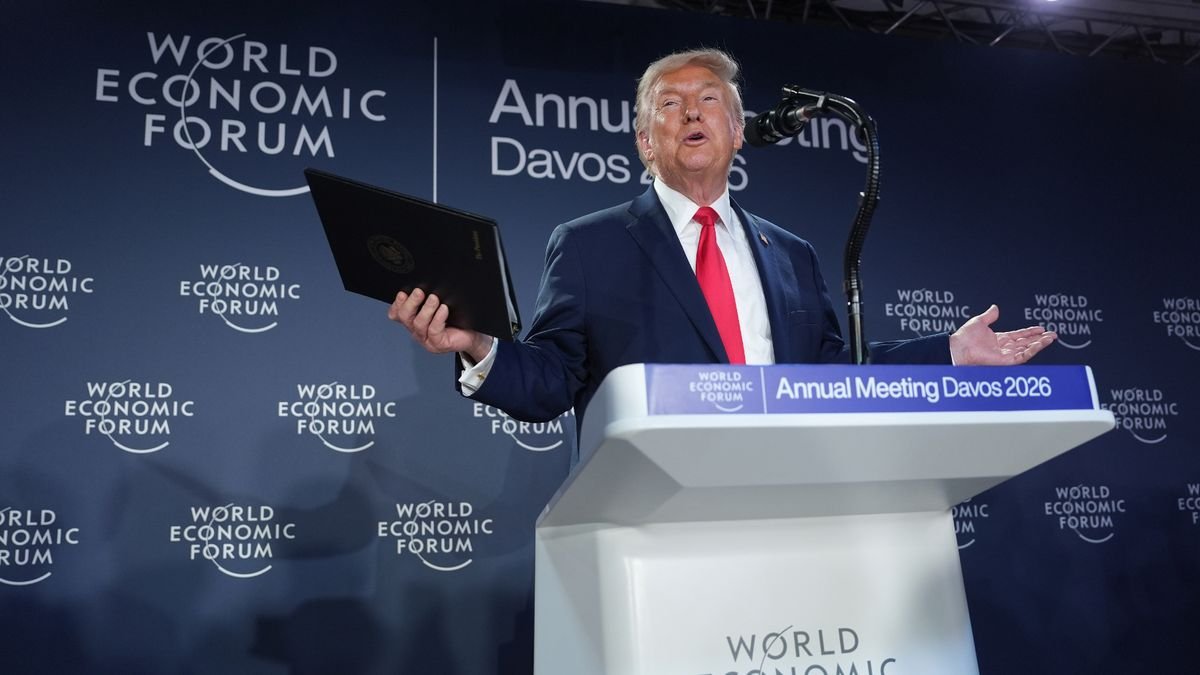


Donald Trump made controversial remarks at a gathering of business leaders, hinting that there are times when having a dictator is necessary. These comments were made during his interactions with global leaders at the World Economic Forum in Davos, where he proposed the establishment of a “Board of Peace.”
While the Board of Peace is ostensibly aimed at promoting peace in the Middle East, concerns have arisen that Trump may be creating an authoritarian alternative to the United Nations. A preliminary constitution for the coalition designates him as the lifelong chairman with complete control over the required $1 billion membership fee. Several participating nations are governed by right-wing authoritarian leaders, including Argentina, Bahrain, Egypt, Hungary, Pakistan, Turkey, and Saudi Arabia.
Some countries like France, Norway, Slovenia, Italy, and Sweden have declined membership, while others such as the UK, China, Germany, and Russia have yet to commit. Out of the 20 countries involved, only Argentina and Israel are classified as “free” according to the Freedom House’s 2025 report. The majority fall into the categories of “not free” or “partly free” due to restrictions on political and civil liberties.
During a meeting with CEOs at the Swiss summit, Trump defended his speech as being well-received and based on common sense rather than political ideology. He expressed optimism about the Board of Peace, anticipating the participation of around 30 countries out of the 50 invited. Notably, the Pope and the Holy See have been extended invitations but have not confirmed their involvement.
When asked about the Board potentially superseding the U.N., Trump suggested that it could serve as a replacement. The level of acceptance among invited countries remains uncertain as parliamentary approvals are still pending in some cases, but overall, there seems to be widespread interest in joining the initiative.