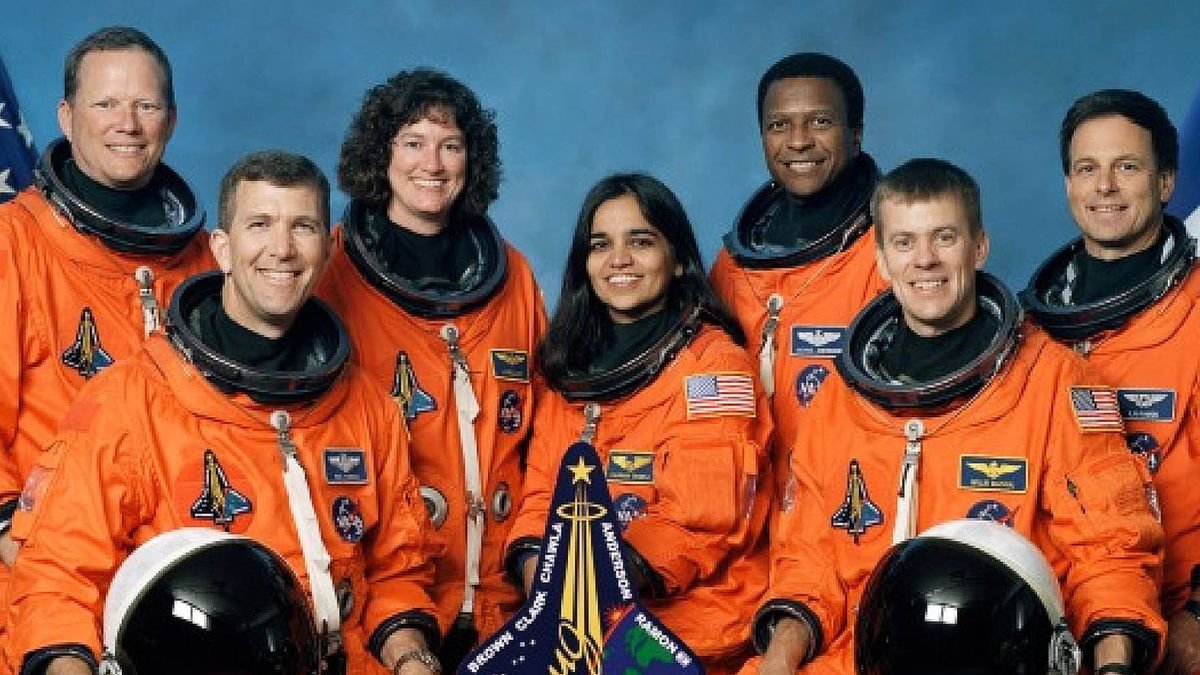


NASA’s mission control had concerns about the safety of Space Shuttle Columbia, although the crew on board was not aware of the potential danger until their final moments. On February 1, 2003, following a 16-day space mission, the seven crew members were preparing to return home.
A piece of foam insulation had dislodged from the external tank during launch, striking the craft’s port wing. Despite being told that the damage was minor, the reality was far graver. Ground staff believed the heat shield was still intact, but it had actually been compromised, making survival during re-entry unlikely.
The crew, including commander Rick Husband, pilot Willie McCool, and mission specialists Kalpana Chawla, Laurel Clark, Michael Anderson, David Brown, and Ilan Ramon, were positioned too far from the International Space Station for assistance. The absence of a robotic arm for repairs and the inability of another shuttle to reach them in time sealed their fate.
Unaware of the impending disaster, the crew prepared for descent, expecting a routine return. As they reentered Earth’s atmosphere over the Pacific Ocean towards the US, they remained calm, sharing light-hearted moments and marveling at the view outside.
However, ground control started receiving irregular data, hinting at issues with the shuttle. Communication was lost with the crew shortly before 9 am EST, marking the tragic end of their journey. Investigations later revealed that the crew likely experienced the spacecraft’s disintegration before losing consciousness due to high-altitude exposure and impact trauma.
Debris scattered across eastern Texas and western Louisiana, leading to a comprehensive search operation to recover the crew’s remains. Despite some crew members not wearing proper gear, no crew errors were found to have contributed to the disaster, which was deemed unsurvivable.
NASA’s Wayne Hale reflected on the difficult decision faced by the team that day, considering whether informing the crew of the damage would have been beneficial. A documentary now delves into the NASA mistakes that led to the tragedy, offering insights into the events that unfolded.
For those interested, the documentary series, “The Space Shuttle That Fell to Earth,” is available for streaming on the BBC iPlayer.