


In the winter of 2022, amidst the snowfall in Montreal, Canada hosted over 180 nations from the UN to negotiate a bold new pact aimed at nature conservation. The planet’s biodiversity faced an unprecedented crisis, with over one million species at risk of extinction; leaders were finally recognizing the imminent threat to ecosystems.
Steven Guilbeault, who was the environment minister at that time, played a key role in achieving consensus and setting a new target to safeguard 30 percent of the world’s land and oceans by 2030, aimed at curbing the ongoing mass extinction. These regions would be designated for long-term conservation, with human activities such as fishing and mining either prohibited or significantly limited.
Additionally, the agreement contained a commitment to assist lower-income countries through funding, which would be utilized to create and manage these protected areas.
“That was the compromise reached in Montreal,” Guilbeault remarked on his return from Climate Week NYC, which coincided with the UN General Assembly to unite climate advocates and policymakers.
“Those advocating for greater ambition had to agree to provide more funding, while those seeking increased financial support had to accept more ambitious goals.”

It’s climate week in New York City – a gathering of top leaders and advocates for a low-carbon future. What on Earth? host Johanna Wagstaffe is there too. She’s talking to other meteorologists about how they handle the pressure to speak out – or stay silent – about climate change. She even heard from one weather presenter who quit his job over it.
However, securing that funding has emerged as the primary obstacle to achieving the Montreal agreement’s objectives. A recent assessment report unveiled in New York this week forecasts that, based on current commitments, only 27 percent of land and a mere 12 percent of oceans will be protected by 2030.
“We have a fair chance of meeting our land protection targets. While we may not reach 30 percent, we will be close,” stated Guilbeault, who resigned as an MP earlier this year due to the Carney government’s rollbacks on climate policies.
“That should certainly provide us some reassurance. However, more efforts are necessary for ocean protection.”
This assessment comes as Canada, the host of the 2022 agreement, has redirected its priorities towards accelerating resource projects, thereby falling behind in its climate commitments.
Wealthy nations must increase financial contributions: report
According to the assessment, enhancing funding is crucial for accelerating nature protection and meeting the established goals. This evaluation was conducted by international advocacy organizations Campaign for Nature and Together for the Ocean.
The Montreal agreement set a target of $30 billion USD annually in international funding for biodiversity protection in developing nations, with approximately $6 billion USD of that amount specifically earmarked for creating protected areas on land and in oceans.
Yet, international financial support has only reached $1.1 billion USD per year, as noted in the report. This funding is intended to flow from wealthier nations like Canada and Japan to developing countries, aimed at establishing parks, funding programs such as park rangers, and supporting local communities and institutions.
“More financial resources are reaching countries in the Global South than ever before, but it still falls short,” Guilbeault remarked.
The report further indicated that most of the funding is sourced from just five major entities: the World Bank; the European Union; Germany; the Global Environment Facility, a multilateral development fund; and the non-profit Rainforest Trust.
It cautioned that any changes by even one of these funders could threaten the overall funding amount.
Nevertheless, the report highlighted positive developments: More than 50 countries have already reported that at least 30 percent of their terrestrial areas are protected. To date, 20 percent of land and 10 percent of oceans have been secured.
Additional support is anticipated. This week, Canada ratified the High Seas Treaty, a new global accord aimed at regulating oceans and seas that lie outside national jurisdictions. With most of the world’s nations now signed on, experts believe it will facilitate the designation of large ocean zones as protected.
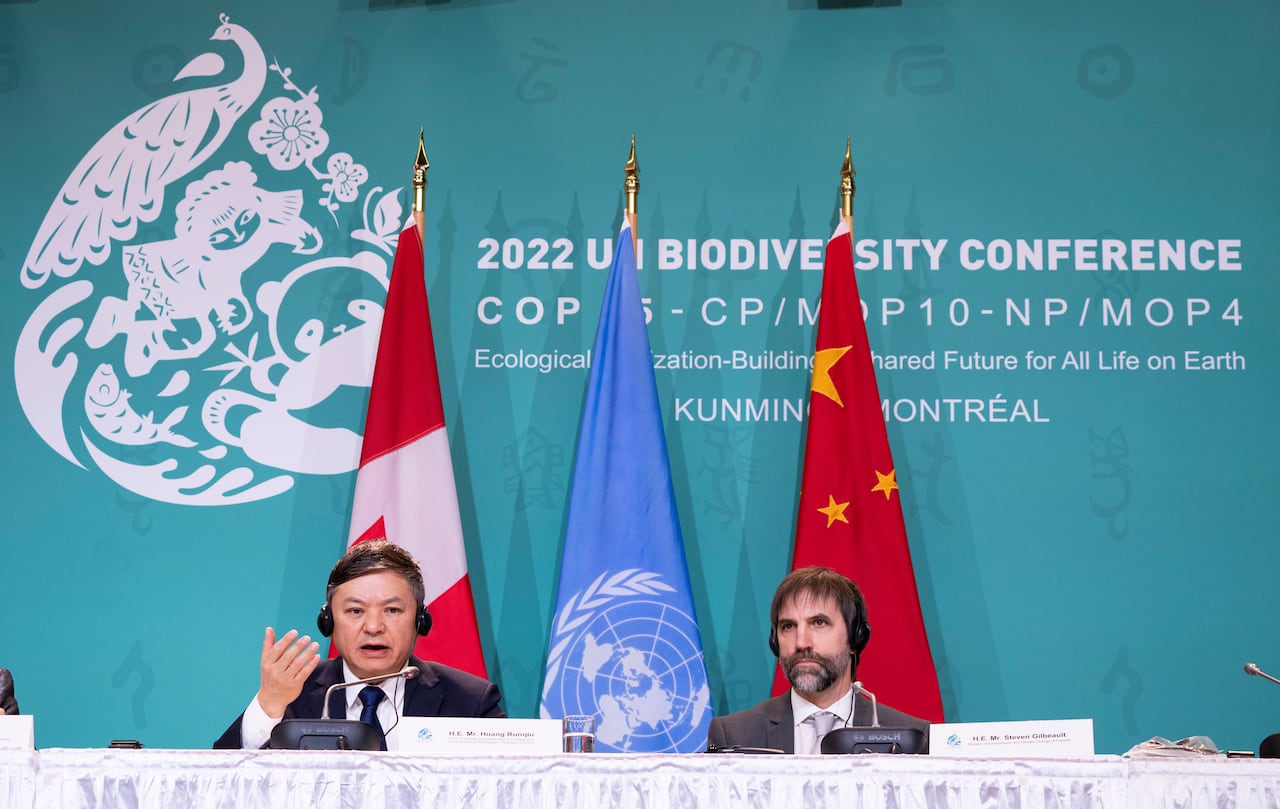
Steve Guilbeault, Canada’s former environment minister, with Huang Runqiu, China’s environment minister, at a COP15 press conference in Montreal in 2022. (Paul Chiasson/The Canadian Press)
Strengthening ocean protection
To date, 101 nations have ratified the High Seas Treaty. Opened for signatures in 2023, it introduces a new form of international law governing oceans, including mechanisms to propose protected areas, combat climate change, and safeguard marine resources, such as fisheries that support billions.
The treaty officially came into effect last January, with its inaugural meeting scheduled for January 2027.
Canada is also taking the lead in ocean conservation by hosting the Our Ocean Conference in Halifax this coming April. Prime Minister Mark Carney has additionally pledged $82 million towards ocean monitoring—especially in the rapidly changing Arctic region—and appointed his wife, Diana Fox Carney, as Canada’s ocean envoy.
Sien Van den Broeke, a Greenpeace Canada campaigner, stated that the Halifax conference will serve as a platform for nations to present their commitments regarding ocean protection. She anticipates that Canada will also make pledges of its own.
With the new global treaty, Canada could also back new proposals for protection along its extensive coastlines. Van den Broeke pointed to the Emperor Seamounts, a biodiversity-rich area in the northern Pacific, and the Sargasso Sea, another significant ecosystem in the Atlantic, as potential sites for Canadian advocacy.
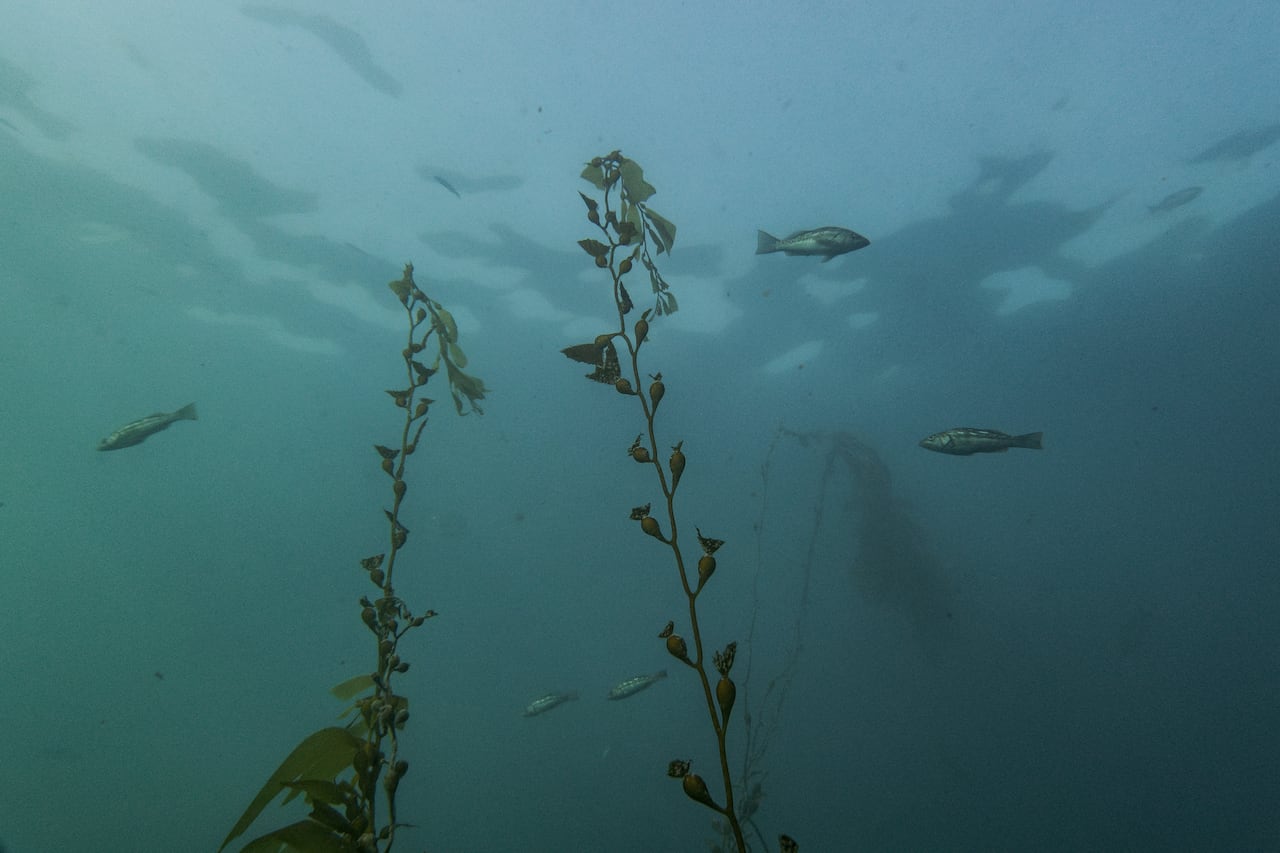
A kelp forest off the coast of California. (Annika Hammerschlag/The Associated Press)
However, advocates are also observing with concern as the Carney government has weakened environmental regulations domestically, as part of the prime minister’s strategy to accelerate significant new infrastructure and resource initiatives amid an ongoing trade dispute with the United States.
-
In an unprecedented warning, leading climate think-tank says Canada won’t meet 2030 climate target
-
Carney says Trudeau-era climate plan was ‘too expensive’ and ‘divisive’
Currently, Canada has secured around 14 percent of its land and 15.5 percent of its oceans, as reported by the Canadian Parks and Wilderness Society (CPAWS). Sandra Schwartz, the society’s national executive director, emphasized that protecting nature transcends mere numerical goals.
“Nature is fundamentally important to our lifestyle and long-term success,” she stated. “This encompasses both economic prosperity and our overall well-being.”
As the host nation of the 2022 conference that resulted in the global accord, Canada ought to set a positive example, Schwartz remarked. Yet, this month, the Carney government proposed new legislation that would significantly expedite the federal environmental review process and alter the assessment of oil and gas pipelines.
Protesters gathered outside Parliament to speak out against environmental and labour aspects of the government’s newly tabled Bill C-39, also known as the Building Canada Strong Act. At least 11 people were arrested.
This comes in addition to laws designed to designate and accelerate significant projects that have faced considerable opposition from environmental organizations.
“Canada is at risk of falling behind,” Schwartz noted.
“It is unfortunate that we seem to be placing the environment in opposition to the economy.”