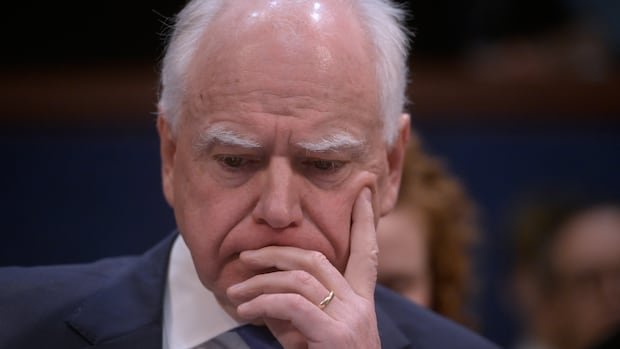


Minnesota Governor Tim Walz announced on Tuesday that the state will not be processing permits for proposed mining projects in the Boundary Waters Canoe Area Wilderness. This decision comes four months after the federal ban on mining in the area was lifted by the U.S. Congress and President Donald Trump’s administration.
The Boundary Waters Canoe Area Wilderness, located along Minnesota’s border with Canada in the Superior National Forest, is a popular destination for outdoor enthusiasts, including canoeists, kayakers, and campers. Governor Walz, a Democrat, emphasized the importance of preserving the wilderness in its natural state.
While Governor Walz’s executive order is temporary and set to expire in April, it has raised concerns about potential environmental impacts. Twin Metals Minnesota LLC, a subsidiary of Antofagasta Minerals, has been pursuing mining activities in the national forest since 2019, focusing on extracting copper, nickel, and other valuable metals without leaving waste rock above ground.
Critics of the governor’s decision, including U.S. Rep. Pete Stauber, have voiced opposition, arguing that the mining projects could bring economic benefits and job opportunities to the region. However, advocates like Becky Rom from Save the Boundary Waters have supported Governor Walz’s action, citing the irreconcilable conflict between copper mining and the preservation of the wilderness.
The governor’s order also includes provisions for the Minnesota Department of Natural Resources to work on legislation prohibiting nonferrous mining in the Rainy River watershed, which is connected to the Boundary Waters. This move adds uncertainty to the future of mining projects in the region, as regulatory approvals at both the state and federal levels are crucial for their realization. James Coleman, a law professor at the University of Minnesota, highlighted the potential challenges and delays that projects may face due to changing political landscapes.
Overall, Governor Walz’s decision to halt mining permits in the Boundary Waters Canoe Area Wilderness has sparked a contentious debate between those advocating for environmental protection and those seeking economic development in the region. The future of mining activities in this pristine wilderness remains uncertain amid evolving regulatory and political dynamics.