

A plant enthusiast, Klaus Koehler, made a rare discovery at the Sylvia Grinnell Territorial Park near Iqaluit in July. He encountered a species that is uncommon in the Arctic, potentially indicating the impact of invasive species in Northern regions as the climate changes.
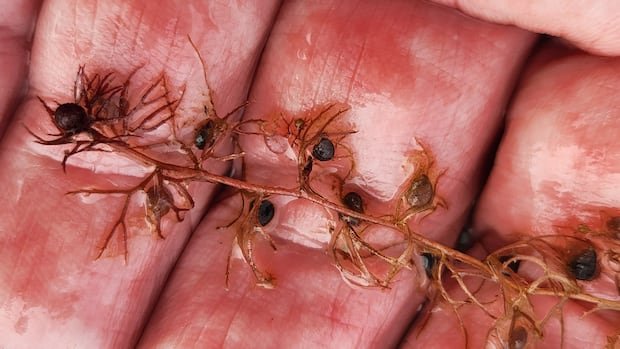
While exploring the park, Koehler retrieved a bladderwort, a brownish weed-like plant, from a pond. Although inconspicuous to the untrained eye, he recognized its unique features. The carnivorous plant is adorned with small black bladders containing partially digested flies, a sight rarely seen in the tundra.
The last documented instance of bladderwort in the area was in 2012 when scientists found samples near Kimmirut, approximately 120 kilometers southwest of Iqaluit. This finding was documented in the scientific journal Phytokeys. During three expeditions to the Arctic, the research team identified more than 30 new plant species in the region.
Koehler believes that the presence of bladderwort in Iqaluit could signify a shifting climate. As temperatures rise, previously unsuitable habitats in the Arctic are becoming conducive to various plant species, potentially altering the ecosystem. This change could lead to the expansion of both invasive and native plants in the Arctic.
Paul Sokoloff, a senior research assistant at Ottawa’s Museum of Nature, shares Koehler’s concerns. He participated in the 2012 study that discovered bladderwort. Sokoloff highlighted the risk of non-native plant species entering Arctic ecosystems through birds, ships, and human activity, posing a threat to indigenous flora.
While Koehler’s discovery may not have immediate adverse effects, Sokoloff warns about the potential harm from invasive plant species. Studies suggest that thousands of plant species could invade the Arctic, displacing native vegetation. Understanding these dynamics is crucial in mitigating the ecological impact of climate change.
Koehler intends to send a sample of the bladderwort to the Museum of Nature for further analysis, aiming to deepen scientific understanding of its northward expansion. This collaborative effort may shed light on the implications of climate change on plant distribution in the Arctic.