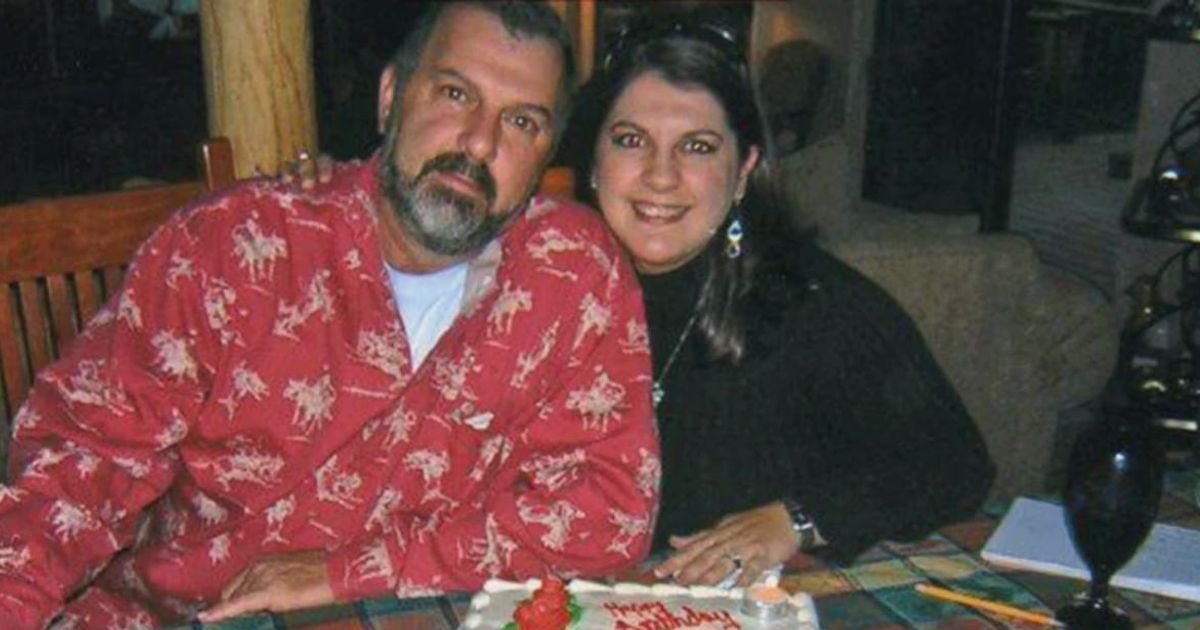


A woman has shared the distressing experience of receiving a call from law enforcement informing her that her father’s head had been discovered in a storage facility among more than 100 other bodies, despite believing he had donated his body to science.
Farrah Fasold’s father, Harrold Dillard, succumbed to cancer at the age of 56 in 2009. Prior to his passing, he was approached by a company named BioCare while in hospice care, requesting permission to utilize his remains for medical training purposes.
Expressing her father’s enthusiasm for the idea, Farrah mentioned, “He saw it as a way to ease the burden on his family. Donating his body was his final act of selflessness.” The family was assured that any unused body parts would be cremated, and his ashes would be returned without charge.
Following his demise on Christmas Eve in 2009, his body was promptly collected from the hospice. Several months later, Farrah was shocked to receive a call revealing the grim discovery of her father’s head by the authorities.
In a state of distress, she stated, “I was completely beside myself. We would never have consented if we had known about the possibility of body part selling – absolutely not. That was not what my father intended at all.”
An investigation revealed that the bodies had been dismembered using tools like chainsaws, suggesting a company involved in acquiring bodies for selective use and resale rather than adhering to the promised cremation of unused parts.
Farrah believes her father’s body was mishandled and not treated in accordance with the assurances made by the company. Recounting her distress to the BBC, she described haunting visions of containers filled with body parts that led to insomnia and sleepless nights.
Referred to as “body brokering,” these entities, often termed “non-transplant tissue banks,” function as intermediaries that acquire human remains under the guise of medical research but engage in the sale of body parts for profit.
Contrary to her expectations of noble contributions to science, Farrah’s father unwittingly became a part of a commercialized system where human bodies are commodified in an inadequately regulated market.
Unlike the regulated organ and tissue transplant industry, which prohibits the sale of organs for transplantation, the trade of cadavers and body parts for research or educational purposes lacks federal oversight, enabling almost anyone to dissect and sell human remains.
Angela McArthur, who oversees a body donation program at the University of Minnesota Medical School, likened the current scenario to historic grave-robbing practices, highlighting the urgent need for improved oversight and regulation in the body donation industry.