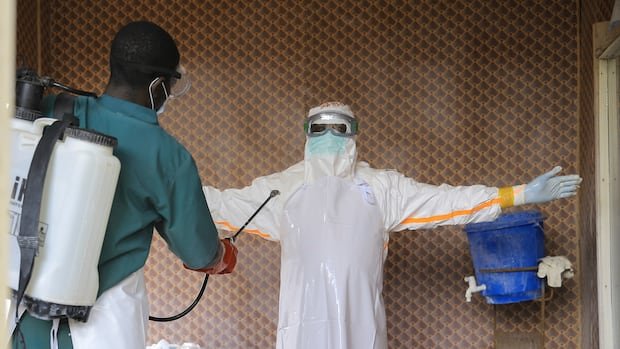


The Ebola outbreak in the Democratic Republic of the Congo has surpassed 4,000 deaths, according to authorities grappling with containing the virus. The most recent data from the health ministry indicated that 4,018 fatalities have been reported, accounting for almost half of the 8,300 confirmed cases, marking it as the most rapidly expanding Ebola outbreak in history.
The outbreak, caused by the rare Bundibugyo virus, was declared by Congo on May 15. This particular virus lacks a known cure or vaccine. In Bunia, the main city in northeastern Ituri province and the epicenter of the outbreak, some healthcare workers, particularly members of the surveillance team responsible for identifying those in contact with infected individuals, gathered to demand payment for overdue wages. Their protest, with placards reading “No money, no data!” and “No payment for months,” was swiftly dispersed by officials.
Front-line workers have staged multiple strikes since the outbreak commenced, further complicating containment efforts. Recently, soldiers reportedly burnt down an Ebola-hit camp that housed a transit center for infected patients in Kigonze, on the outskirts of Bunia. This incident forced 19,000 camp residents to flee.
Julien Harneis, the UN senior Ebola coordinator, highlighted the challenges of establishing Ebola transit and treatment centers, citing the scarcity of funds and staff as significant obstacles. Harneis emphasized the repercussions of losing such facilities, leading to diminished capacity and investments, ultimately depriving individuals of crucial care.
An aid worker from Médecins Sans Frontières (Doctors Without Borders) contracted Ebola while working in Congo and was evacuated to the Netherlands for treatment. The worker arrived in the Netherlands via a specialized medical flight and was transferred to a high-level isolation unit at Leiden University Medical Center.
The World Health Organization has raised concerns about the virus spreading rapidly into new health zones, straining already limited resources. Africa CDC noted a decrease in newly confirmed cases, but attributed this decline to challenges in obtaining community cooperation in certain hotspots due to security concerns.
While the number of confirmed cases has decreased in recent weeks, with an average of 490 cases and 230 deaths in September compared to 850 cases and 470 deaths in mid-July, the situation remains fragile. The DRC has faced challenges due to community resistance and violent incidents, such as the recent attack on a politician defending government actions against the outbreak.
The assault on Marie-Célestin Karondwa, a local official in Butembo, who was beaten to death after supporting government responses to Ebola, underscores the deep-rooted mistrust toward health workers and authorities in the country. Efforts to combat the 17th Ebola outbreak in the Central African nation have been hindered by skepticism, with some residents considering Ebola a hoax and harboring distrust towards the government, citing past mismanagement of prior Ebola crises and widespread corruption.