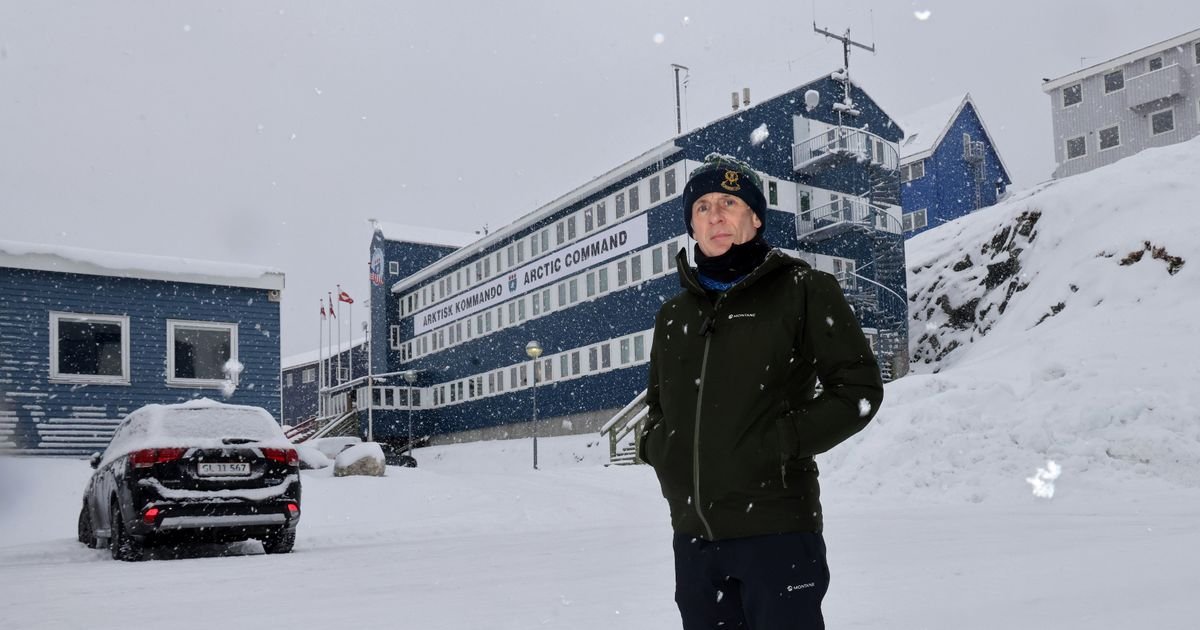


Recent developments at Joint Arctic Command in Nuuk, Greenland, have heightened the seriousness for the Danish armed forces stationed there. Despite the modest appearance of the blue building housing them, lacking significant fortification, plans are underway for a substantial £3.5 billion expansion in the Arctic region. This expansion includes the establishment of a new command HQ in Nuuk to enhance monitoring capabilities for threats in the Arctic.
Denmark’s decision to purchase an additional 16 F-35 fighter jets from the US, bringing their total fleet to 43, signals a strategic response following Donald Trump’s earlier consideration of taking over Greenland. This move, coupled with the new defense package, reflects a significant strengthening of the Danish Armed Forces in the region.
Undeterred by the ramping up of defenses, President Trump dismissed the investment, suggesting it would only contribute minimally to their capabilities. Prior to Trump’s provocative statements, Denmark’s Defense Minister emphasized the importance of bolstering their military capacities in the Arctic to safeguard against potential threats.
Collaborating with Greenland and the Faroe Islands, Denmark’s defense enhancements will include the acquisition of two Arctic ships, maritime patrol planes, drones, and early warning radar systems. Notably, stationed personnel in Nuuk are prepared by law to engage any invader without hesitation, underscoring the country’s commitment to defending its territory.
Prime Minister Mette Frederiksen warned that any military attempt to seize Greenland would have severe repercussions, potentially jeopardizing NATO’s integrity. Trump’s claims of foreign naval presence near Greenland have sparked concerns, with Danish and Norwegian defense officials monitoring heightened Russian naval activities in the Arctic, although they have not reported any Chinese warships in their vicinity.
As global dynamics evolve rapidly, the Danish armed forces remain vigilant, acknowledging the changing landscape and the necessity to adapt to emerging challenges in the Arctic region.