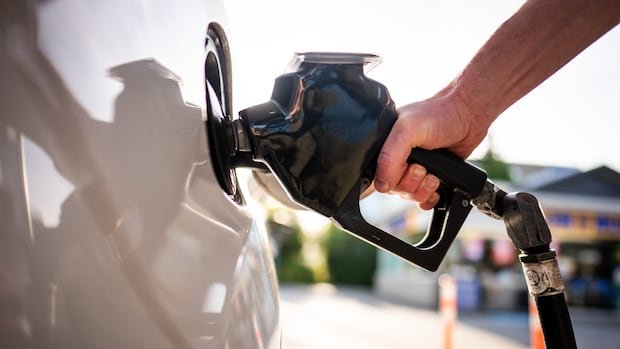


Gas prices in Canada are on a downward trend, bringing relief to drivers across the country. After peaking earlier this week at an average of 194.5 cents per litre, prices have since dropped to 186.9 cents per litre as of Friday. This decrease is attributed to the seasonal transition from summer-blend gasoline to winter blend, a shift that typically leads to lower prices in the fall. The winter blend is designed to prevent fuel-line freezing and optimize engine performance in colder temperatures.
According to Dan McTeague, president of Canadians for Affordable Energy, there is a possibility of further reduction in gas prices over the weekend before stabilizing. However, McTeague noted that significant price improvements are unlikely without a substantial increase in oil, diesel, jet fuel, and gasoline supply globally.
Meanwhile, escalating tensions in the Middle East, particularly the closure of the Strait of Hormuz and disruptions in the Bab al-Mandeb Strait, have disrupted oil flow, resulting in a surge in oil prices. The price of Brent crude oil has surpassed $100 per barrel, hovering at around $104 US. Conversely, diesel prices in Canada have seen a sharp increase, with the average cost per litre standing at $2.751. Cities like Calgary have slightly lower prices at $2.513, while Vancouver has exceeded the three-dollar mark at $3.055 per litre.
The surge in diesel prices is concerning for consumers as it impacts transportation costs for goods, potentially leading to higher prices for groceries and other consumer items. Tej Dulat, director of government and public affairs at the Canada Truck Operators Association, highlighted that consumers are likely to bear the brunt of increased fuel costs as companies are forced to pass on expenses.