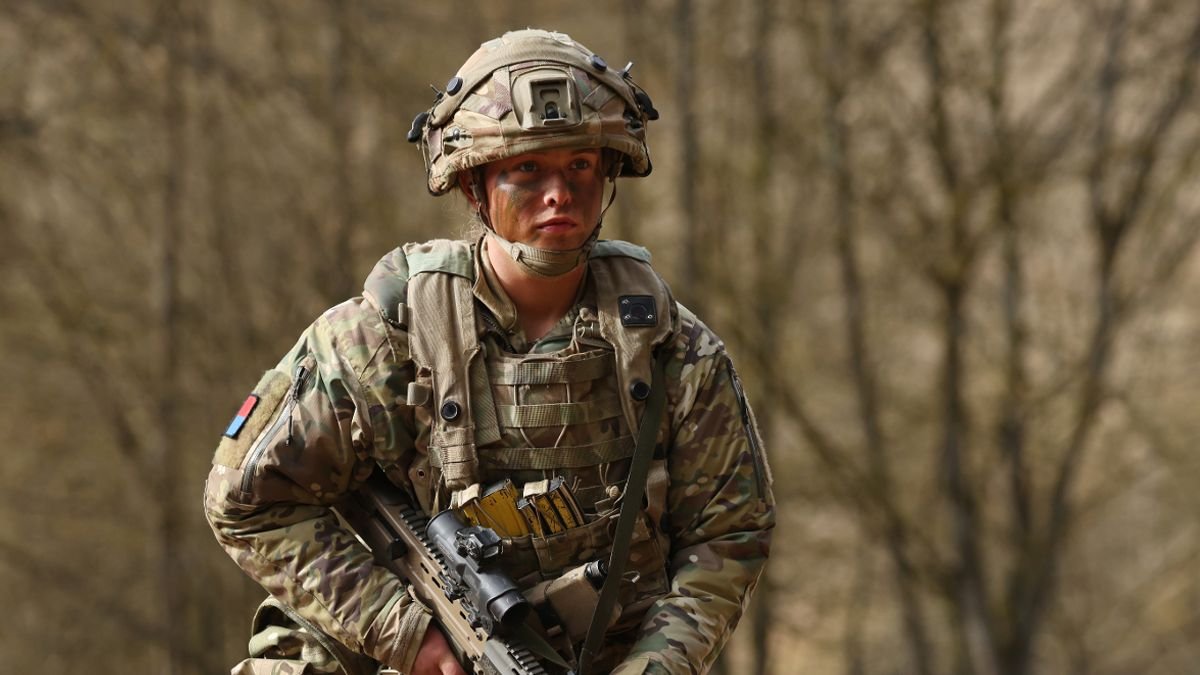


In light of escalating indications that Vladimir Putin may be gearing up for a larger conflict in Europe, Britons are being advised to prepare for a level of warfare akin to what their grandparents or great-grandparents endured. But what would this realistically entail in the UK?
Although Prime Minister Keir Starmer stated last year that conscription was not being discussed in Britain, concerns persist that the army’s current numbers may not suffice in the event of a war. Anthony Professor Glees, an expert in European affairs from The University of Buckingham, highlighted the importance of bolstering the armed forces through conscription as a cost-effective measure to address threats to the British way of life.
A recent National Security Strategy report emphasized that the threat of nuclear weapons today is more intricate than during the Cold War era, underscoring a period of profound uncertainty in the nation. Prime Minister Keir Starmer has committed to allocating five percent of GDP to national security within ten years to align civilian and military priorities in a manner not witnessed since 1945.
In the hypothetical scenario of conscription being implemented in the UK, certain occupations would likely be exempt, but overall participation would be encouraged. While historically women have not been called up for direct combat roles, public opinion seems to be shifting, with a majority supporting the conscription of both men and women in the event of a potential World War III.
During World War II, British men aged 18 to 41 were required to register for the National Service to bolster military strength against Nazi Germany. Subsequently, a second National Service act in 1941 mandated single women and childless widows aged 20 to 30 to serve. As the war progressed, individuals up to 51 years old were drafted, while those aged 52 to 60 were involved in civil defense duties, ensuring widespread participation.
Following World War II, mandatory enlistment ceased, transitioning Britain’s armed forces to a professional volunteer model. National Service persisted until May 1963, when the final serviceman was discharged. In a significant development, women have been granted access to all roles in the armed forces, including combat positions, since all restrictions were lifted in 2018.
In contemporary Britain, the government is exploring innovative approaches to attract young individuals to military training through a new initiative. Set to launch in March 2026, individuals under 25 will have the opportunity to participate in a ‘gap year’ military program, aimed at enhancing army recruitment and fostering life skills amidst evolving security challenges, particularly those posed by Russia.
The proposed gap year scheme has garnered positive reception from experts, including Professor Anthony Glees, who advocates for national conscription in response to the current security landscape. While the National Security Strategy report underscores the complexities of nuclear threats today, the absence of any reference to conscription in the report is viewed by Professor Glees as a missed opportunity.
Despite enduring debates over National Service, successive governments have consistently rejected the notion of military conscription, favoring a volunteer-based armed forces model. However, with the evolving global security scenario, there are advocates who believe that National Service is now imperative for national defense.
Professor Glees emphasized the significance of a well-trained, spirited British ground force in deterring potential threats, emphasizing the need for a robust defense strategy amid geopolitical uncertainties. Recent warnings from a Kremlin propagandist about potential nuclear strikes on European capitals have reignited concerns over broader conflict implications.