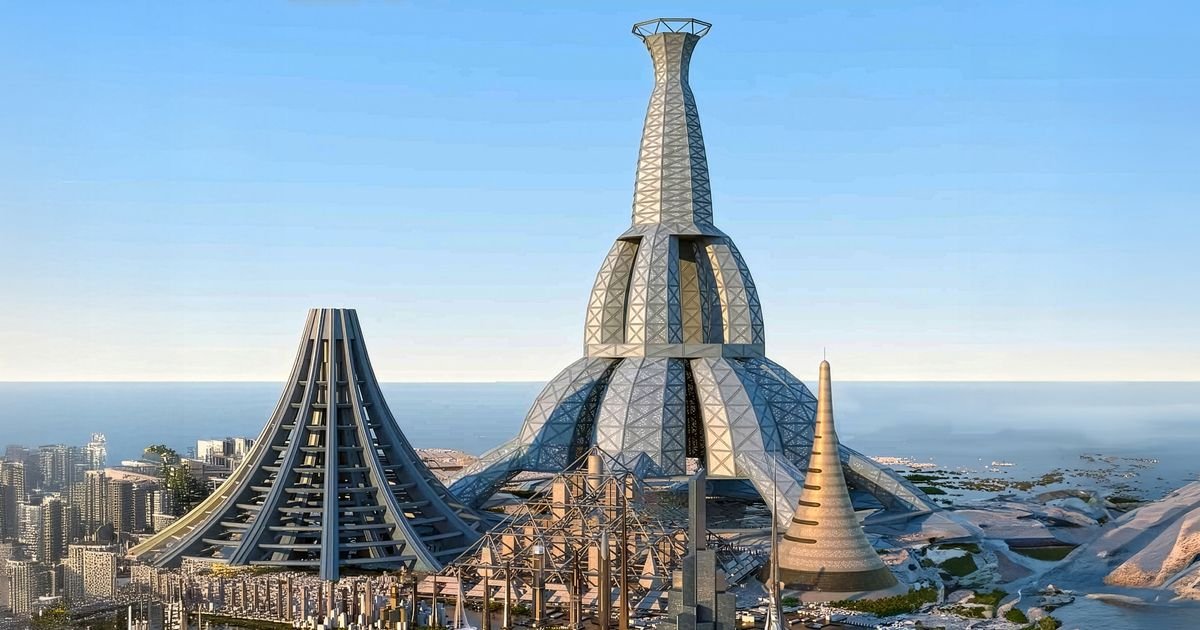


In Dubai, the Burj Khalifa holds the title of the tallest man-made structure globally, soaring to an impressive height of 828 meters. However, a monumental ultra-skyscraper concept was envisioned for Tokyo over three decades ago, surpassing even Mount Everest.
The Tokyo Tower of Babel, a brainchild of Professor Toshio Ojima from Waseda University, aimed to reach a staggering 10,000 meters in height, towering 1,150 meters above Everest. This ambitious proposal, presented at the 1992 Brazil Earth Summit, intended to accommodate around 30 million inhabitants over a construction span of 100 to 150 years.
Inspired by the biblical Tower of Babel, where a unified populace endeavored to construct a structure touching the heavens, the Tokyo Tower of Babel design featured a conical shape with a broad base spanning 110 kilometers, tapering as it rose skyward with 1,969 floors.
Although the project never materialized due to an estimated cost of £23 trillion, logistical challenges such as massive steel column requirements, airspace restrictions, seismic risks, extreme temperatures, and inhabitable upper floors further hindered its realization. Despite the impracticality, ongoing discussions and studies persist regarding the Tokyo Tower of Babel’s potential impact and future prospects.
The proposed skyscraper envisioned distinct zones for residential, commercial, and even space development purposes, showcasing a visionary outlook despite its unlikelihood of actual construction. Online commentary reflects on the complexity and absurdity of sustaining such a colossal structure, highlighting practical concerns and hypothetical scenarios in jest.