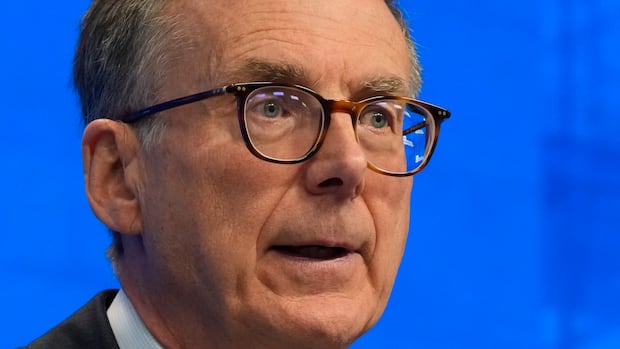


Tiff Macklem, the governor of the Bank of Canada, anticipates that elevated energy prices will continue to impact consumers at the gas station and in other areas through 2027, even as oil prices decrease from their recent highs.
During a speech on Tuesday, he cautioned that a subsequent wave of the recent oil crisis, triggered by conflict in the Middle East, is likely to fuel inflation in the coming year. His comments have tempered hopes that the recent drop in benchmark oil prices would bring significant relief to consumers and businesses alike.
“The secondary impact of the oil shock will contribute to the ongoing persistence of inflation,” he stated at an event organized by the Economic Club of Canada in Toronto.
“Historical delays and our own business surveys indicate that consumers will see more of these costs passed on in the year ahead.”
Macklem noted that up to now, businesses have absorbed much of the increased production and transportation expenses associated with high energy costs.
Statistics Canada’s inflation data for October provided little indication that high oil prices are affecting other economic sectors. The consumer price index rose by 3.1 percent year-over-year last month, consistent with a 3.1 percent rise in September.
In October, the Bank of Canada raised its policy interest rate by 25 basis points to 2.5 percent, marking the end of a year-long pause at 2.25 percent with its first rate hike since 2023.
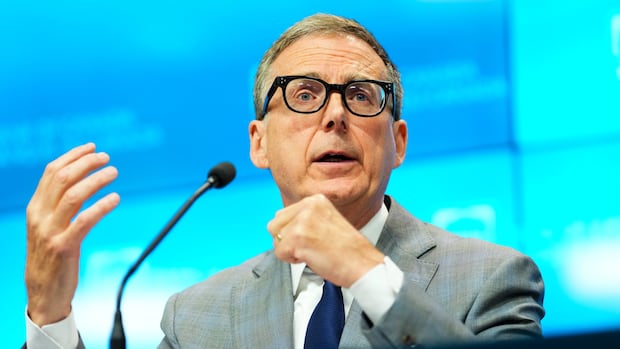
Tiff Macklem, governor of the Bank of Canada, indicates that the bank needs ‘clear evidence’ of a decline in core inflation after maintaining rates in October.
In their deliberation summary released on Nov. 10, officials indicated that additional rate hikes may be necessary due to the interplay of high oil prices and escalating business costs in a robust economy, which could lead to widespread inflation through 2027.
In its October Monetary Policy Report, the Bank of Canada projected that inflation would hover around three percent for much of 2027. At that time, policymakers expressed their expectations for prices to gradually decrease toward two percent, the central bank’s target midpoint, by 2028.
Since that report, global oil prices have dropped to approximately three-month lows, partly due to potential military de-escalation between the United States and Iran. Additionally, increased exports of Middle Eastern oil to global markets through the crucial Strait of Hormuz, which has experienced significant disruptions due to the ongoing conflict, have contributed to this decline.
Looking forward, Macklem mentioned that the Bank of Canada is preparing to deal with “larger and more frequent supply shocks.”
“Inflation is likely to be derailed more often and for extended periods,” he remarked on Tuesday.
“While monetary policy cannot reduce global energy prices, it can mitigate how significantly they affect the economy. Our objective is to prevent a scenario where Canadians encounter rising costs across a wide range of goods and services.”
The Bank of Canada is set to announce its final rate decision of 2026 on December 9.
Before that meeting, the governing council will evaluate two new economic indicators. Statistics Canada is planning to release its third-quarter gross domestic product figures on November 30, followed by the November Labour Force Survey on December 4.
The speech on Tuesday marked one of Macklem’s first significant public engagements following the announcement earlier this month that he will not pursue a second term and will depart when his seven-year term concludes on June 2.