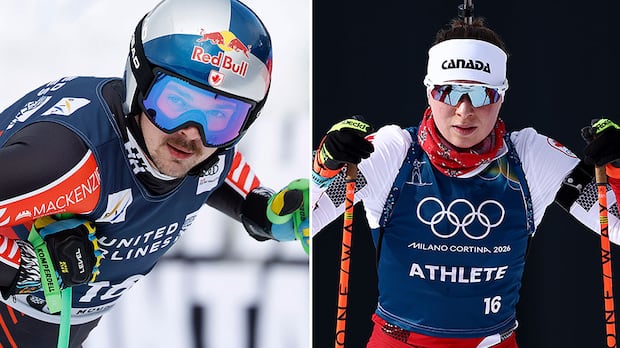


Two additional national sports organizations (NSOs) are collaborating.
On Tuesday, Alpine Canada and Biathlon Canada revealed their decision to merge as part of a broader initiative to modernize and align the Canadian sport system.
“This presents a once-in-a-generation chance to rethink how we provide sport in Canada and to foster a more robust future for athletes at every level,” stated Andrew Baker, CEO and president of Alpine Canada. “Uniting Alpine Canada and Biathlon Canada allows us to establish a more integrated system that leverages the strengths of both sports.”
Following in the footsteps of sliding sports, this move comes after Bobsleigh Canada Skeleton and Luge Canada declared plans to merge in October. Additionally, the Canadian Olympic and Paralympic committees announced their intention to collaborate more closely earlier this month.
-
With the increase in funding, leaders in Canadian sports recognize the need to boost participation
-
A continuous effort: Participation remains the key focus as Canada’s sporting future unfolds at a national summit
This merger follows Alpine Canada’s signing of a five-year, $25 million sponsorship agreement with Edmonton’s Capital Power in September, which was partially dependent on the merger.
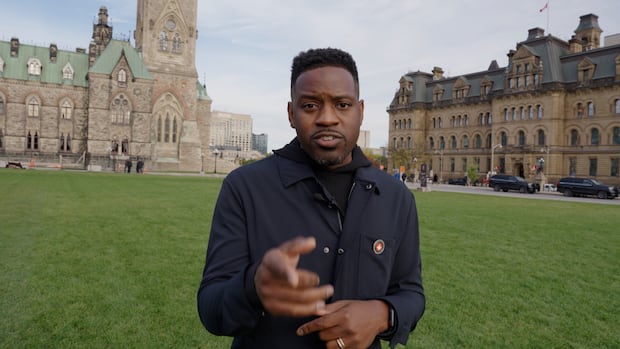
CBC Sports’ Donnovan Bennett interviewed Canada’s secretary of sport, Adam van Koeverden, among others, to discuss the current state of Canada’s sporting system and how it can be enhanced.
Merger fulfills amalgamation requirement
This merger appears to meet the amalgamation requirement, a concept initially highlighted in the Future of Sport report, which described Canada’s sports system as “fragmented.” This sentiment was reiterated by federal Secretary of State for Sport Adam Van Koeverden as he articulated his vision within the framework of a nine-year, $2.5 billion government investment in sports.
“By collaborating with Alpine Canada to consider forming a unified national sport organization, Biathlon Canada is courageously and thoughtfully embracing this change, while committing to create new opportunities for Canadian biathletes at all levels,” Biathlon Canada CEO Kerry Dankers stated.
-
‘Numerous ideas’: Canada’s sports leaders convene in Ottawa to discuss future steps
-
Rising costs of youth sports compel children to make early choices
“With the support of the Government of Canada facilitating this transformation, along with the unique backing from Capital Power, we have a fantastic chance to unify, modernize, and cultivate a stronger future for our sports,” they added.
The amalgamation offers notable advantages, such as shared expertise, reduced costs, and improved consistency within Canadian sports, as highlighted in the announcement made by the organizations on Tuesday.
Nonetheless, a significant concern as NSOs have considered mergers has been the fate of their provincial and territorial organizations (PTSOs). The joining of two NSOs could encompass as many as 26 PTSOs, which may result in potential issues and a dilution of power for individual organizations.
Alpine Canada and Biathlon Canada confirmed that their PTSOs would remain autonomous.
“Provincial and territorial organizations, clubs, coaches, officials, volunteers, and community partners form the foundation of Canada’s sports system. Their expertise, connections, and relationships within local communities will be vital to the success of both sports,” they emphasized in a statement.
At the same time, financial concerns have also been identified as a hurdle to amalgamation.
With the financial commitment from Capital Power, along with additional core funding from the government—Alpine Canada received $2.775 million and Biathlon Canada obtained $1.04 million—the financial landscape has shifted.
In an interview with CBC Sports in October, Baker mentioned that a prospective merger would focus on achieving “efficient growth.”
“We are not discussing millions in operational savings, possibly not even hundreds of thousands. It’s likely thousands we are talking about. So that is not the transformative aspect of this merger. The transformation and modernization stem from establishing a stronger platform for partnership within the system, sharing best practices and insights, and the ability to consolidate marketing resources,” he detailed.
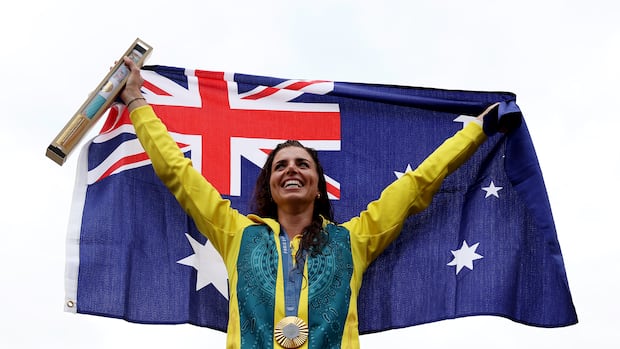
CBC Sports’ Karissa Donkin explores the inner workings of Australia’s sporting system and considers what lessons Canada might learn from its approach.
Simpler process for Alpine Canada
For Alpine Canada, this is potentially a more straightforward process, as the organization already governs three disciplines: alpine, Para alpine, and ski cross.
Baker noted that the organization’s initial action after finalizing the Capital Power agreement was to eliminate team fees for athletes.
Now, along with biathlon, it will pursue van Koeverden’s other outlined priorities.
“We aim to enhance our athletes’ performance. We want to boost participation, encouraging more Canadians on ski hills and in this other sports domain—whatever that may be—and we seek to establish more accessible pathways,” Baker mentioned in October.
“Thus, we promptly removed team fees for our development and national teams. This initiative aligns with the Capital Power vision. It’s about the potential to grow. What’s exciting is that this encompasses not only Alpine but also another sport.”
-
Canadian sports organizations and corporate sponsors view grassroots investment as a key opportunity
-
A New Game Plan: How Australia’s sports dominance may provide Canada with clues to fix its ‘broken’ system
Meanwhile, Capital Power’s COO Ferio Pugliese envisioned additional organizations merging.
He referenced the U.S. Ski and Snowboard Federation, which oversees a wide array of disciplines including alpine, cross-country, freestyle moguls, freestyle aerials, freeski, snowboard, ski jumping, Nordic combined, Para alpine, and Para snowboard.
“This is a gradual approach. Let’s consolidate this one; let’s establish governance; let’s collaborate with the NSOs. By this time next year, perhaps we will have a center of excellence or an example to showcase that demonstrates, ‘Alright, we’ve worked this out. Here’s how it can be done. Athletes benefit from it, the organization improves, and funds are allocated effectively,’” Pugliese stated to CBC Sports in October.
“Then, we can return and say, ‘Alright, who’s the next sport? Who else could merge?’ And we welcome the prospect of seeing another one come into the fold each year.”
For the moment, the focus is solely on alpine and biathlon. However, if the process progresses smoothly, amalgamation—not just within skiing, but across the entire system—could begin to gain momentum.