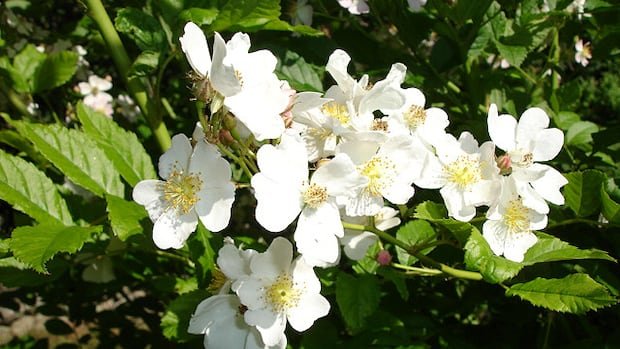


In Nova Scotia, the rapid growth of multiflora roses is causing concern among experts, despite their beauty with delicate pink or white flowers. Ecologist Samantha Knight, a lead steward at Fort Needham Memorial Park in north-end Halifax, highlighted the multiflora rose as the primary challenge in managing invasive plants in the region. These roses have the ability to outcompete surrounding vegetation, leading to the domination of ecosystems with dense coverage.
David Steele, who heads a volunteer group in the Wolfville and Kentville area, described the multiflora rose as a formidable plant. Originating from Asia, it was initially introduced for ornamental rose breeding and later used by farmers to create cattle fences due to its dense and thorny nature, hindering animal passage.
The spread of multiflora roses is facilitated by various means, including bird dispersion of the plant’s seeds through eating the berries. Construction activities that disturb the soil can also inadvertently transport the seeds, leading to unexpected growth locations such as streams. Despite favoring open and sunny areas, these roses demonstrate resilience by thriving in challenging environments.
Steele and his volunteer team, founded recently, employ manual methods like hand removal, chainsaws, and an extractigator tool to eradicate multiflora roses and other invasive species. Steele cautioned against the inadvertent disruption of local biodiversity by replacing native flora with non-native ornamental plants.
Knight is actively mapping multiflora rose locations at the Halifax park and preparing for removal operations. Her approach involves consistent cutting to starve the plants rather than uprooting them, acknowledging the significant effort required to manage invasive species effectively for ecosystem resilience. She emphasized the importance of preserving intact habitats for essential ecosystem services like food, clean air, and water filtration, underscoring the need to combat invasive species for ecosystem health and biodiversity conservation.