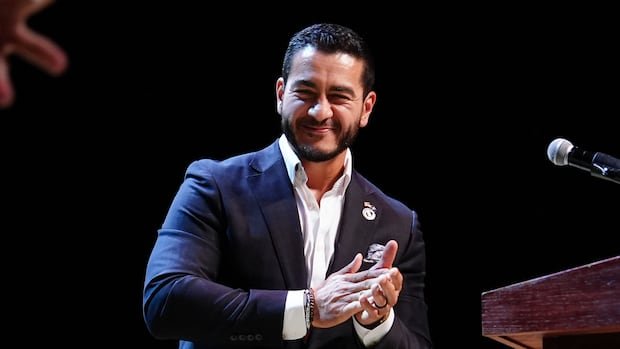


Abdul El-Sayed, a former public health official who tapped into Democratic discontent with the party’s establishment, narrowly won over Rep. Haley Stevens in Michigan’s U.S. Senate primary, setting the stage for a significant test for progressives in a crucial battleground state. El-Sayed is now set to compete against Republican Mike Rogers, a former congressman, in the November midterm election, which will play a crucial role in determining Senate control. He faces the initial challenge of uniting Democratic factions following a divisive primary that showcased differing visions for a party seeking a way back to influence.
Stevens, who had the support of the Democratic establishment, including outgoing Sen. Gary Peters, conceded defeat and endorsed El-Sayed. El-Sayed campaigned on a more assertive stance against entrenched corporate interests and President Donald Trump, declaring his victory as a groundbreaking political event despite narrowly edging out Stevens. He likened the win to shaking up the political landscape, quoting Muhammad Ali.
Curtis Hertel, the chair of the Michigan Democratic Party, emphasized the need for unity heading into the November elections. He stressed the importance of collaboration in reclaiming the country, highlighting El-Sayed’s track record as a champion for the people. Meanwhile, Trump criticized El-Sayed during a speech in Las Vegas, accusing him of harboring negative sentiments towards Israel and Jewish people, which El-Sayed vehemently denied, clarifying his stance on antisemitism and the Israeli-Palestinian conflict.
The Associated Press officially declared El-Sayed the winner following updated results from Wayne and Oakland counties, confirming an insurmountable lead over Stevens. Despite the narrow victory margin, El-Sayed’s win represents a significant shift within the Democratic Party, especially considering his previous loss in the 2018 gubernatorial primary. El-Sayed campaigned on progressive policies such as “Medicare for All,” revisiting military aid to Israel, and advocating for campaign finance reform, garnering support from prominent progressives like Bernie Sanders and Alexandria Ocasio-Cortez.
Stevens, a four-term congresswoman and moderate candidate, received backing from Senate Minority Leader Chuck Schumer and substantial outside funding, including a significant investment from the American Israel Public Affairs Committee (AIPAC). Her platform focused on manufacturing and economic issues, highlighting her past electoral successes as a testament to her ability to defeat Rogers in the general election. The upcoming Senate race in November will play a pivotal role in determining Senate control during the final years of Trump’s presidency, with the primary contest intensifying due to concerns over electability and party unity.
El-Sayed positioned himself as the anti-establishment candidate, advocating for a departure from corporate influence within the Democratic Party and embracing a more progressive agenda. While not identifying as a democratic socialist, El-Sayed garnered support from individuals aligned with that ideology, underscoring the clear differences between the candidates. Voter sentiments varied, with some supporting El-Sayed’s call for more assertive action and others favoring Stevens’ collaborative approach.
National organizations injected unprecedented amounts of money into the primary race, turning it into a significant test of external financial influence. Groups supporting Stevens poured over $50 million US into the campaign, with a substantial portion coming from AIPAC. The spending highlighted the role of U.S. policy on Israel in the race, with El-Sayed advocating for a halt in military aid to Israel while Stevens maintained a strong stance in support of the bilateral relationship despite internal party debates surrounding the Israeli-Palestinian conflict.