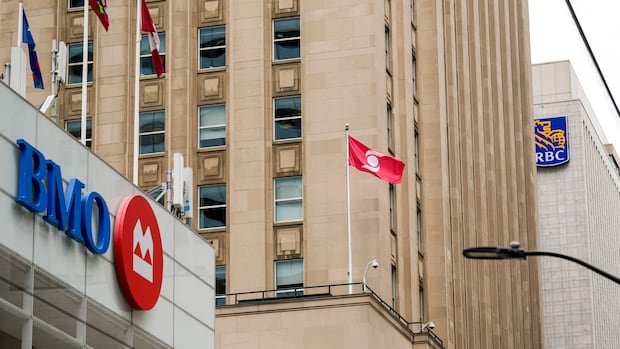


Canada’s major banks may not face direct tariff expenses, but their extensive loan portfolios valued in trillions of dollars are vulnerable to the economic repercussions of the escalating trade dispute with the United States. Despite this, top executives remain optimistic.
This week, Canada’s largest banking institutions commenced reporting their third-quarter financial outcomes amidst political tensions and the rollout of financial assistance by the Canadian government to mitigate the impact of American tariffs. Bank of Montreal and Scotiabank were the first to disclose their results on Tuesday, with National Bank following on Wednesday, and Royal Bank of Canada, Toronto-Dominion Bank, and CIBC on Thursday.
During a post-earnings conference call with financial analysts, Scotiabank’s CEO Scott Thomson reassured that the recent trade uncertainties are “manageable,” highlighting positive aspects of the Canadian economy, such as job growth, fiscal stability linked to oil prices, and increased activities driven by governmental initiatives.
Following U.S. President Donald Trump’s imposition of 50 percent tariffs on approximately $28 billion worth of Canadian goods over the weekend, Scotiabank stated that these tariffs directly affect less than one percent of the bank’s loan portfolio. However, the banks remain exposed to broader macroeconomic risks through various consumer products like mortgages, auto loans, and credit cards.
Both Thomson and Bank of Montreal’s CEO Darryl White viewed the current trade tensions as an opportunity for federal and provincial governments to eliminate internal trade barriers. White emphasized the benefits of Trump’s “America First” policy on Canada’s economy, noting that being second to the U.S. in an “America first” world can still yield advantages.
Driven by positive market sentiments, shares of Canada’s leading banks are trading near record highs on the Toronto Stock Exchange. Scotiabank’s stock surged by up to seven percent, while BMO shares rose by about one percent. Analysts suggest that the Canadian banks have shown resilience so far, but challenges lie ahead as the trade dispute unfolds.