

Stood in the grand entrance of a towering building on Fifth Avenue, where even the ceiling appeared to be sun-kissed, I observed the entrance of a reality TV personality into the American political arena.
Back in June 2015, many failed to recognize the potential threat posed by Donald Trump. His entry into the White House race was not just a show but a strategic move aimed at stirring up division. By portraying migrants as criminals and patriotism as grievance, Trump orchestrated a dramatic entrance, akin to a season finale of a reality TV show.
The theatrics were just the beginning of a calculated political offensive designed to sow permanent discord through spectacle and division. The repercussions of this strategy are still reverberating globally and have now reached places like South East Manchester.
Since that pivotal day, Trump has honed a playbook that redefines modern populism. Presenting himself as the voice of the “forgotten” Americans, he vilified the judiciary, media, and civil servants as corrupt adversaries. His narrative painted a picture of a battle between the common people and an elite establishment, elevating immigration from a policy issue to a cultural battleground, symbolized by a border wall and deportation as a show of strength.
While promising to uplift working-class families, Trump’s legislative accomplishments have disproportionately favored corporations and the wealthy. Despite claims of restoring dignity to the workforce, many workers struggle with stagnant wages and soaring living costs, with job security becoming a luxury.
In the realm of international relations, Trump initiated trade wars under the guise of protecting domestic industries, imposing tariffs and straining alliances in the name of “America First.” Blaming external forces for setbacks and branding critics as enemies became a norm, with loyalty valued over expertise and division as the guiding principle of governance.
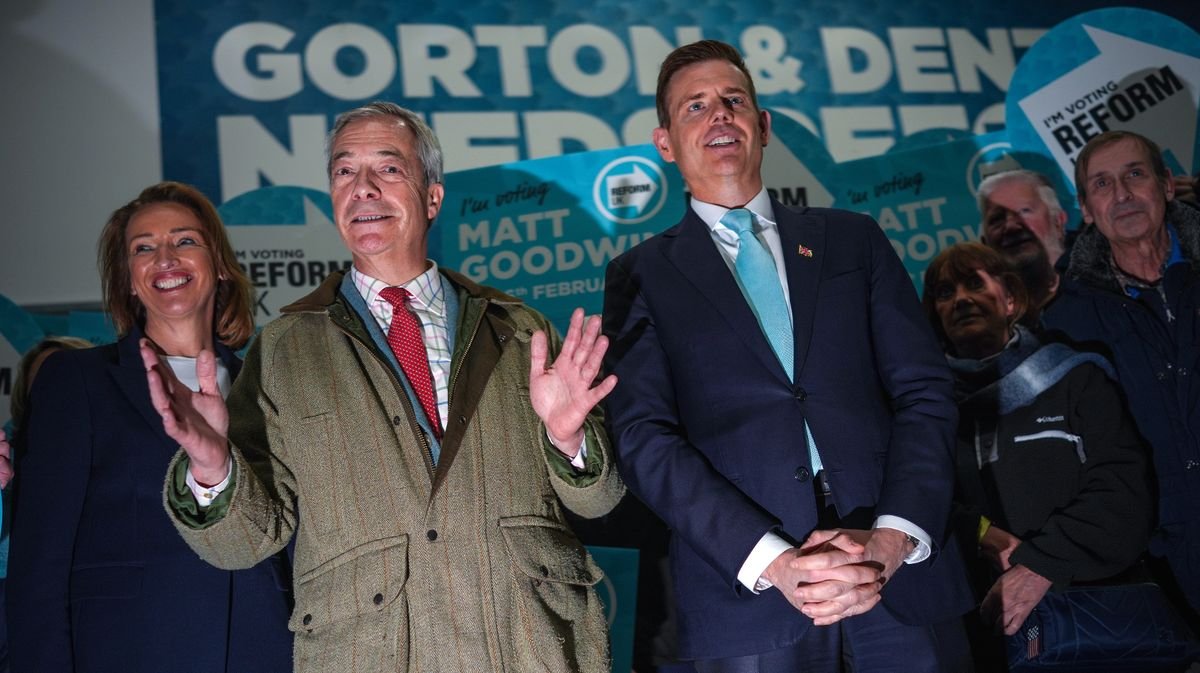
The striking parallels between Trump’s tactics and those embraced by Nigel Farage and Reform UK are hard to overlook. Farage’s admiration for Trump is evident in his rhetoric and approach, which echo the divisive tactics employed by the former US president. Surrounding himself with like-minded individuals, Farage has cultivated a team that mirrors Trump’s strategy of weaponizing outrage for political gain.
The convergence of individuals like Zia Yusuf, Richard Tice, and former Tory members around Farage underscores a shift not just in personnel but in ideological alignment, highlighting a migration of rhetoric towards a confrontational style of politics.
Both Trump and Farage have capitalized on themes like national sovereignty, immigration control, and anti-globalism to galvanize their support base, portraying themselves as champions of the people against a corrupt elite. Their economic policies, tax reforms, and deregulation efforts have predominantly favored the wealthy while projecting a facade of empowerment for the common citizen.
While their policy positions align on several fronts, the real danger lies in their shared tone and approach to governance. Both have mastered the art of provocation, turning controversy into currency and leveraging social media for political gain. Personality-driven politics overshadow substantive policy discussions, fostering a culture of division and animosity.
As voters in Gorton and Denton head to the polls, they face a crucial decision that transcends party lines. They are tasked with determining whether to embrace a politics of grievance, conflict, and personality cult or to opt for a more stable and inclusive approach to governance.
The echoes of Trump’s legacy serve as a cautionary tale, illustrating the long-term consequences of divisive politics and the erosion of institutional trust. While the UK’s parliamentary system differs from the US presidential model, the impact of toxic rhetoric and polarizing tactics should not be underestimated in shaping the political landscape.
Amidst economic challenges, social pressures, and political uncertainties, the temptation to embrace disruption and radical change may seem appealing. However, history has shown that governance built on anger and division often leads to governance failure, benefiting the privileged few at the expense of the broader populace.
The upcoming election in Gorton and Denton serves as a litmus test for the direction of British politics, signaling whether the country is veering towards a path of confrontation or opting for a more harmonious and equitable future.
In the face of imported outrage and divisive tactics, British voters have the opportunity to reaffirm their commitment to fairness, resilience, and unity. By rejecting the politics of division and grievance, they can uphold the values that define a strong and inclusive society.
Democracy hinges not on outrage but on informed judgment. As ballots are cast in Gorton and Denton, the collective decision will shape not just the outcome of an election but the very fabric of political culture in the UK.
In contrast to the polarized landscape in America, British voters have a chance to steer away from the pitfalls of divisive politics and uphold a tradition of fairness, stability, and unity. Let this election be a testament to the strength of a nation that values inclusivity over discord and unity over division.